Nurturing Potential. Supporting Families.Mississauga & the GTA

Our services

Support for the moments that matter.

Explore support for communication, learning, independence and connection. We can help you choose a starting point based on your child’s strengths and your family’s priorities.

Discuss your child’s needs

Before you decide

Places, ages and locations vary by service. Before you agree to a plan, we discuss:

Fit for your child
Your child’s age, interests, communication and support needs.
People and setting
Who will provide and supervise the service, and where it will take place.
Time and cost
Current availability, the proposed schedule, fees and any additional costs.

We usually assess your child’s needs before support starts. We explain what this involves, who will do it and any fees. See how getting started works.

ABA therapy and assessment

Understanding your child first, then building skills that matter in everyday life.

A woman and a boy sharing a wooden train activity on a floor mat.
AI-generated illustration.

Applied Behaviour Analysis (ABA) is an approach to understanding how people learn and behave. It helps us teach useful skills and understand how a child’s surroundings affect their learning.

Assessment as part of getting started

Before an ABA program begins, we assess your child’s strengths, skills and support needs. This may include talking with your family, observing your child and reviewing relevant records. We may also use structured tools to assess skills.

We explain what the assessment can and cannot tell us. We then use what we learn and your family’s priorities to agree on goals and a plan. Assessment is part of getting started. Assessing behaviour or skills does not necessarily include a diagnosis.

A plan shaped around your child

Goals may focus on communication, play, joining activities, everyday routines, safety or independence. We choose them with you, based on your child’s needs and interests, and explain how we will review progress.

We use positive teaching strategies that interfere as little as possible with your child’s choices and daily life. We pay attention to their preferences, comfort and willingness to take part.

Ask about ABA support


Occupational therapy

Support for play, learning, self-care and daily routines.

A woman helping a boy practise fastening a button on his shirt.
AI-generated illustration.

Occupational therapy helps children and young people take part in daily activities. Support may focus on movement, handwriting, dressing, eating routines or organization. It may also help your child manage sensory experiences, such as sounds or textures.

How occupational therapy may help

The occupational therapist looks at your child’s needs, the activity and their surroundings. They may suggest practice, strategies or changes to make an activity more manageable. They review goals with your family and involve your child as appropriate.

Ask about occupational therapy

Speech-language therapy

Support for understanding others and expressing needs, ideas and feelings.

A woman listening to a girl who gestures beside a picture communication board.
AI-generated illustration.

Communication can take many forms. A speech-language pathologist can assess and support speech sounds, understanding language and having conversations. Support may also include ways to communicate using pictures or a communication device.

How communication support may help

Therapy builds on your child’s interests and how they already communicate. The therapist can suggest strategies to use during play, routines and conversations.

Ask about speech-language support

Group programs

Opportunities to connect and take part in activities with other children.

Children and an adult building together with wooden blocks around an activity table.
AI-generated illustration.

Children connect with others in different ways. Shared activities offer chances to practise joining in, taking turns, solving problems and asking for what they need.

Finding a suitable group

We consider age, communication, interests, support needs and safety when discussing groups. We support participation that respects each child’s differences and choices.

For autistic young people ages 10–17, explore Groundwork at Bloom.

Ask about group programs

Groundwork at Bloom

Small-group skills programming for autistic young people ages 10–17

Build skills for friendships, teamwork, speaking up, managing challenges and everyday independence through sport, art, music, cooking and community activities.

Age groups
10–13 and 14–17, also matched by interests and support needs
Schedule
Weekday evenings and Saturdays, in twelve-week terms
Support
2 or 3 young people per therapist, supervised by a registered behaviour analyst

Parent and caregiver guidance

Practical strategies that fit your family’s routines and priorities.

A woman and a boy choosing a picture card together at a table.
AI-generated illustration.

You know your child in ways no report can capture. We listen to what you know and offer practical guidance to help you support your child.

We explain strategies in everyday language, make space for questions and work with you on practical ways to support learning at home.

Our goal is to support you as a parent.

Topics may include communication, play, moving between activities, sleep routines, everyday skills and coping. We can also help caregivers use consistent approaches. We work with you on changes that feel manageable.

Ask about caregiver guidance

Respite services

Planned care for your child so you can take a break.

We discuss your child’s communication, routines, interests, support needs and safety when planning respite. Ask about activities, staff, schedules, emergency plans and what the service includes.

Respite provides care and support. It only includes clinical therapy when a regulated professional has assessed and approved that specific service.

Ask about respite

School and IEP guidance

Practical help with school conversations and your child’s education plan.

School meetings and education plans can bring a lot of questions. We help you understand your options and prepare for conversations about your child’s learning.

We can review your child’s Individual Education Plan (IEP) with you and help you prepare questions for school meetings. We can also explain the Identification, Placement and Review Committee (IPRC) process.

We explain school terms such as accommodations and modifications. Together, we can discuss questions about classroom support and learning goals.

Your voice matters. We help you prepare to use it.

With your consent, Bloom can share relevant clinical observations with the school. The school board remains responsible for education decisions and the IEP process.

School and IEP guidance is a paid service. Ask about fees and what is included before you book.

Ask about school and IEP guidance

Academic support and tutoring

Support for your child’s learning needs. Academic tutoring is provided by qualified teachers.

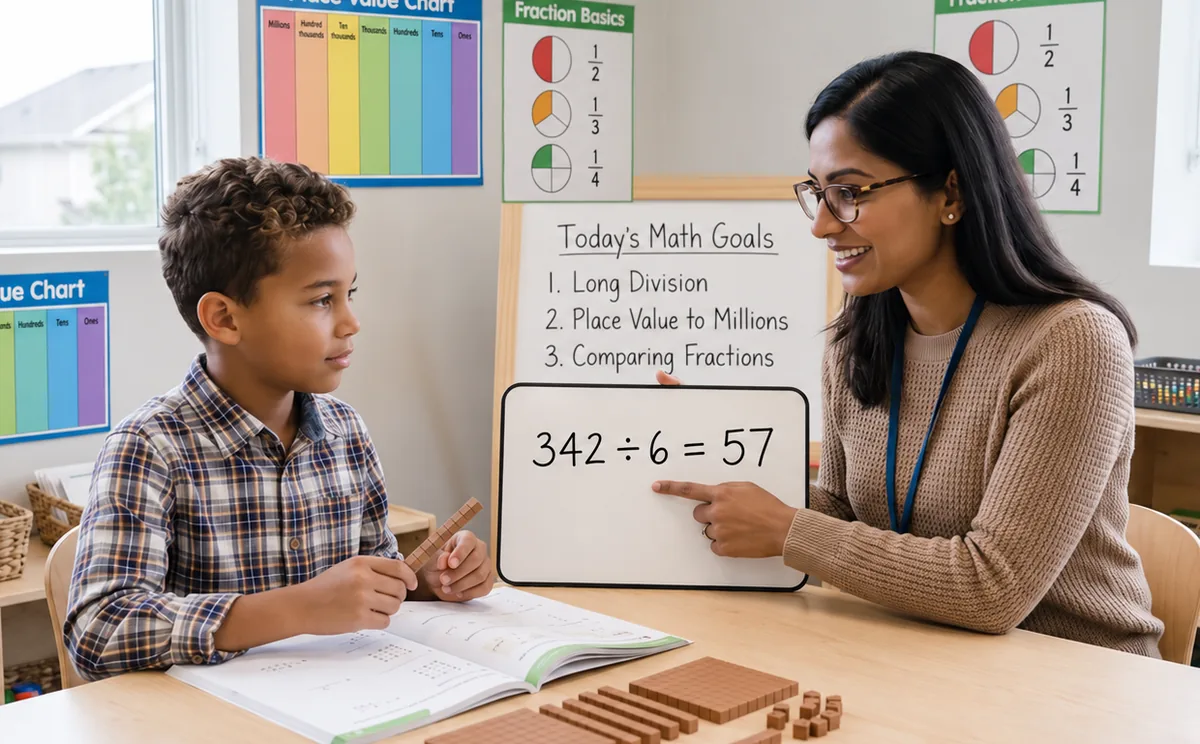
A woman and a boy working on a maths lesson with a whiteboard, workbook and counting materials.
AI-generated illustration.

Some children need help with learning routines. Others need extra teaching or practice in a subject. We offer support based on your child’s strengths, interests and learning needs.

Academic support may focus on reading, writing, maths, following instructions or organizing schoolwork.

Qualified teachers provide academic tutoring. They help your child understand school subjects and practise skills that need more attention.

We discuss your child’s learning, school priorities and your family’s goals. Together, we choose a starting point and review progress.

Support that helps your child understand, practise and grow in confidence.

Ask about academic support and tutoring

Free support for parents

Free parent support group

A place to connect with other parents and share experiences.

Share experiences, questions and encouragement with other parents. There is no fee to join. Ask about upcoming meetings, how to join and whether the group is a good fit for you.

Ask about the free parent support group

Clear goals. Open conversations.

Your family stays involved.

You help shape goals and review progress. We explain how we teach each skill, welcome questions and help you use relevant strategies in everyday routines.

We arrange times to observe sessions while respecting your child’s comfort and privacy. Read about our approach to care or explore fees and funding.

Let's find a starting point

You don't have to choose
a service on your own.

Your first conversation is free, by phone or your preferred remote format. Tell us what you would like help with. Expect a reply within 48 hours.